"The Yellow Peril Dr. Fu Manchu" was a representation of how the 'White" world looked upon "Oriental's".

In October 1912 the first part of Sax Rohmer's serialized "The Mystery of Fu Manchu" was published. The novel version would be first published in 1913 just after the serialization was completed.
The character of Fu Manchu was a Chinese master criminal and scientist who wanted to rule the world. He appears to have unlimited funds at his beckoning and is a high ranking member of the "Si-Fan" a secret society actually ruling China.
When Sax Rohmer, real name Arthur Henry Ward, published that first episode of "The Mystery of Fu Manchu" known in the United States as "The Insidious Dr, Fu Manchu". The fear of "The Yellow Peril" was still prevalent especially in England whose colonial history was a major factor in their life.
Chinese historian Wing Fai Leung wrote in his article ""Perceptions of an East-West Yellow Peril: An Archive of Anti-Asian Fear" published in "The Irish Times" on August 16, 2014:
"The phrase Yellow Peril (sometimes Yellow Terror or Yellow Spectre) — coined by Kaiser Wilhelm II of Germany, in the 1890s, after a dream in which he saw the Buddha riding a dragon, and threatening to invade Europe — blends Western anxieties about sex, racist fears of the alien Other. and the Spenglerian belief that the West will become outnumbered and enslaved by the East”.
Fighting Fun Manchu's every move is Dennis Nayland Smith and to a very large degree Rohmer's "Sherlock Holmes". In the first three novels of the series Smith is a Colonial Police Commissioner operating out of Burma and perfectly reflecting the British Colonial system. By today's standards Smith is extremely racist in those first three novels "The Mystery of Fu Manchu", "The Return of Fu Manchu" and "The Hand of Fu Manchu". All published between 1913 and 1917.
When Sax Rohmer restarted the series in 1931 with his fourth novel. He introduced his reading audience to "The Daughter of Fu Manchu". Nayland Smith was now a Knighted Assistant Commissioner of Scotland Yard. Rohmer passed away in 1959 at the time of the publication of the 13th book directly written by him "Emperor Fu Manchu". By this time Sir Dennis Nayland Smith was working for British Intelligence and at times with the American FBI in consultation.
Every Holmes must have his Watson. In the case of Smith there is Dr. Petrie who in many ways is Dr. John H. Watson's double. However, he is a chemist and in the novels we never know his first name. That would change with the motion pictures were he had several.
Over the 47 years between the first magazine appearance of Fu Manchu until the publication of "Emperor Fu Manchu". The popular character still represented the White Man's fear of the "Yellow" Oriental and their desire to be the dominant race. This fear was also seen reflected in the United States. In 1928 Philip Francis Nowlan wrote the novel "Armageddon 2419" which was followed by "The Airlords of Han" in 1929. In these two futuristic stories the "Han" are the Chinese who have conquered and enslaved the world, because of their advance science and technology. A group of "White" freedom fighters in North America are joined by a man from the 20th Century who has somehow been in a state of suspended animation. He is Anthony "Tony" Rodgers. Whose nickname would change from "Tony" when Nowlan started a newspaper comic strip to "Buck". My article on "Buck" Rodgers can be found at:
http://kinescopedreams.blogspot.com/2015/01/buck-rodgers-armageddon-2419-ad-from.html
January 7, 1934 would see the premier of another new comic strip "Flash Gordon" by Alex Raymond. It was very obvious to Raymond's readers that "Ming the Merciless " of Mongo was a take off on Fu Manchu. Even to his mustache and obvious Chinese style appearance and dress.
However, there were also counters to these stereo types in three Oriental Detectives. The first of them Chinese/American "Charlie Chan" was based in Honolulu, Hawaii and created by Earl Derr Biggers in 1919. Author John P. Marquand would create a Japanese/American detective "Mr. Moto" in 1935. Perhaps the major opposite of Fu Manchu was Yale Graduate and United States Treasury Agent James Lee Wong. This Chinese/American detective lived in San Francisco and is also wealthy. "Mr. Wong" as he was known was created in 1934 by Hugh Wiley.
All of the above characters would come to the motion picture screen played by Caucasian actors.
Ming by Charles Middleton.

Charlie Chan most notably by Warner Oland and Sidney Tolar.

Mr. Moto by Peter Lorre.

James Lee Wong by Boris Karloff.

So it's not a surprise that the head of "The Yellow Peril" Fu Manchu was also played by Caucasian actors. The first screen version was a 1923 15 episode silent serial made in the U.K. under the title of "The Mystery of Fu Manchu".
Playing the evil genius was actor Harry Agor Lyons.

Who looks more like his previous role as "Sherlock Holmes" than an oriental villain. The following year Lyons was back in the 23 part serial "The Further Mysteries of Dr. Fun Manchu".
In these two films not only does Dr. Fu Manchu not really look Chinese, but his famous mustache does not appear. On August 10,1929 the first motion picture with a shorter version of the mustache appeared in the United States. The film was a hybrid as originally it was being shot as a silent film, but then scenes were reworked with sound. The movie was "The Mysterious Dr. Fu Manchu".
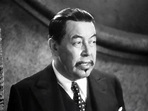
Playing Fu Manchu was Swedish Actor Warner Oland. Oland would be known to fans of Werewolf movies as "Oriental" Dr. Yogami who bites Henry Hull in Universal Studio's 1935 "The Werewolf of London" and later to detective fans, as I have mentioned, playing "Charlie Chan".
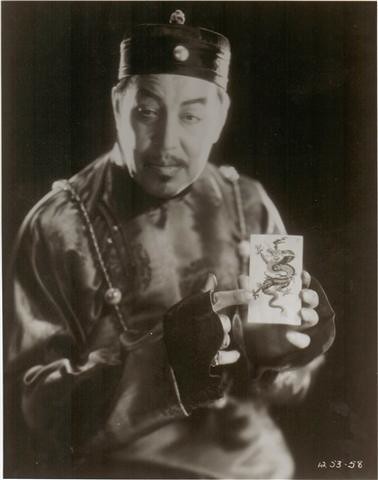
The story has Fu Manchu's wife and child killed by British colonials during the Boxer Rebellion and he seeks revenge years later on those responsible. In the film one of those on Fu Manchu's list is Claude King as Sir John Petrie the father of Dr. Jack Petrie played by Neil Hamilton. Dr. Petrie is a friend of Nayland Smith played by O.G. Heggie. This is the first movie to give Dr. Petrie a first name and that name, as I also mentioned above, will change in other features. Neil Hamilton is known to fan of the camp 1960's television series "Batman" for playing "Commissioner Gordon". Actress Jean Arthur played the damsel in distress Lia Eltham. Arthur would star in two of Frank Capra's classic motion pictures "Mr. Deeds Goes to Washington" with Gary Cooper and "Mr. Smith Goes to Washington" with James Stewart. She also would play Van Hefin's wife in "Shane" starring Alan Ladd.

Above, Jean Arthur and Neil Hamilton
Warner Oland, O.P. Heggie, Neil Hamilton and Jean Arthur were all back on May 2, 1930 for "The Return of Fu Manchu". Thought dead at the end of "The Mysterious Fu Manchu" the Chinese mastermind is back still seeking revenge on those who killed his wife and child.

Only Warner Oland returned from the original cast for "Daughter of the Dragon" released on September 5, 1931. Once more he was the insidious doctor and once more still after those who killed his wife and daughter.

As the above poster indicates the top star was Anna May Wong as Lin Moy. Her motion picture career ranged from 1919 to 1961 and she is considered the first true Chinese/American actress. By biography of the actress can be found at:
Warner Oland, O.P. Heggie, Neil Hamilton and Jean Arthur were all back on May 2, 1930 for "The Return of Fu Manchu". Thought dead at the end of "The Mysterious Fu Manchu" the Chinese mastermind is back still seeking revenge on those who killed his wife and child.

Only Warner Oland returned from the original cast for "Daughter of the Dragon" released on September 5, 1931. Once more he was the insidious doctor and once more still after those who killed his wife and daughter.

As the above poster indicates the top star was Anna May Wong as Lin Moy. Her motion picture career ranged from 1919 to 1961 and she is considered the first true Chinese/American actress. By biography of the actress can be found at:
Third billing went to Japanese actor Sessue Hayakawa who had become a silent screen matinee idol. Most of my readers know the actor as the cruel camp commander in 1957's "The Bridge On the River Kwai".
"Daughter of the Dragon" was loosely based upon Sax Rohmer's "The Daughter of Fu Manchu". The motion picture has the odd distinction of having two leading Oriental actors with star billing playing opposite a Caucasian actor made up to be Oriental. Had Wong and Hayakawa not be recognized by the public for their silent film performances their roles would have gone to non-Asian actors at the time the film was made.
To put this in perspective for producer Samuel Bronston's epic about the Boxer Rebellion "55 Days at Peking" released 32 years later in 1963. The part of Chinese Empress Tzu-His was played by British actress Flora Robson and Chinese General Jung-Lu by British actor Leo Glenn, because the idea of giving a leading role to an Oriental actor was still not concidered at the time. For those of my readers interested in Samuel Bronson who made such epics as "El Cid" and "The Fall of the Roman Empire". Along with John Wayne's "Circus World". Here is a link to my bio on him:
http://kinescopedreams.blogspot.com/2016/04/samuel-bronston-from-king-of-1960s-road.html
The same practice held for Native American roles and for a comparative look this link will take you to my article on the portrayal's of Indians in the motion picture industry.
http://kinescopedreams.blogspot.com/2015/08/native-americans-hollywood-style-i.html
Returning to "Daughter of the Dragon". In the story a Chinese Princes becomes entangled with the evil Fu Manchu, and a secret agent.
There are some changes to the main characters in this picture. For one Dr. Jack Petrie is now just Ronald Petrie played by Bramwell Fletcher and Nayland Smith is nowhere to be found. The story has the beautiful Lin Moy, Anna May Wong, unknowingly living next door to Dr. Fu Manchu, Warner Oland. Also unknown to the girl is that she is the daughter of Fu Manchu and her lover, Ah Kee, Sessue Hayakawa, is a secret agent after him.


This was the final motion picture with Warner Oland, but the next feature film in 1932 had some great casting if not major stereo types.

Boris Karloff dawned the Mandarin make-up as Dr. Fu Manchu. Lewis Stone, who starred in the 1925 Willis O'Brien classic "The Lost World" and would play Mickey Rooney's father in the "Andy Hardy" series, played Nayland Smith. Dr. Petrie is nowhere to be seen, but playing Karen Morley's love interest is Charles Starrett. In three more years he would become a major "B" Western star in a series as "The Durango Kid". However, it is the actress playing Fu Manchu's daughter Fah Lo See (the correct spelling should be Fah Lo Suee) which is of interest here. She is portrayed by Myrna Loy two years before Loy would play Nora Charles in the MGM series "The Thin Man" and also co-star with Clark Gable and her "Thin Man" co-star William Powell in "Manhattan Melodrama". A boring movie that will always be remembered as the one John Dillinger went to see with "The Lady in Red" and was killed by the FBI as he left Chicago's "Biograph Theater".
Boris Karloff as Dr. Fu Manchu

"Daughter of the Dragon" was loosely based upon Sax Rohmer's "The Daughter of Fu Manchu". The motion picture has the odd distinction of having two leading Oriental actors with star billing playing opposite a Caucasian actor made up to be Oriental. Had Wong and Hayakawa not be recognized by the public for their silent film performances their roles would have gone to non-Asian actors at the time the film was made.
To put this in perspective for producer Samuel Bronston's epic about the Boxer Rebellion "55 Days at Peking" released 32 years later in 1963. The part of Chinese Empress Tzu-His was played by British actress Flora Robson and Chinese General Jung-Lu by British actor Leo Glenn, because the idea of giving a leading role to an Oriental actor was still not concidered at the time. For those of my readers interested in Samuel Bronson who made such epics as "El Cid" and "The Fall of the Roman Empire". Along with John Wayne's "Circus World". Here is a link to my bio on him:
http://kinescopedreams.blogspot.com/2016/04/samuel-bronston-from-king-of-1960s-road.html
The same practice held for Native American roles and for a comparative look this link will take you to my article on the portrayal's of Indians in the motion picture industry.
http://kinescopedreams.blogspot.com/2015/08/native-americans-hollywood-style-i.html
Returning to "Daughter of the Dragon". In the story a Chinese Princes becomes entangled with the evil Fu Manchu, and a secret agent.
There are some changes to the main characters in this picture. For one Dr. Jack Petrie is now just Ronald Petrie played by Bramwell Fletcher and Nayland Smith is nowhere to be found. The story has the beautiful Lin Moy, Anna May Wong, unknowingly living next door to Dr. Fu Manchu, Warner Oland. Also unknown to the girl is that she is the daughter of Fu Manchu and her lover, Ah Kee, Sessue Hayakawa, is a secret agent after him.


Boris Karloff dawned the Mandarin make-up as Dr. Fu Manchu. Lewis Stone, who starred in the 1925 Willis O'Brien classic "The Lost World" and would play Mickey Rooney's father in the "Andy Hardy" series, played Nayland Smith. Dr. Petrie is nowhere to be seen, but playing Karen Morley's love interest is Charles Starrett. In three more years he would become a major "B" Western star in a series as "The Durango Kid". However, it is the actress playing Fu Manchu's daughter Fah Lo See (the correct spelling should be Fah Lo Suee) which is of interest here. She is portrayed by Myrna Loy two years before Loy would play Nora Charles in the MGM series "The Thin Man" and also co-star with Clark Gable and her "Thin Man" co-star William Powell in "Manhattan Melodrama". A boring movie that will always be remembered as the one John Dillinger went to see with "The Lady in Red" and was killed by the FBI as he left Chicago's "Biograph Theater".
Boris Karloff as Dr. Fu Manchu
Myrna Loy as Fah Lo See

Lewis Stone as Nayland Smith

The basic story has Nayland Smith attempting to stop Fu Manchu from locating the tomb of Genghis Khan and obtaining the Khan's mask and sword. Fu's plan is to proclaim himself the reincarnation of Genghis Khan and lead the people's of Asia against "the white man". Which brings me to the two reasons the film caused major controversy.
The Chinese Government through their Washington, D.C. Embassy protested the story line of the motion picture. In their formal protest the Chinese Government mentioned a line used by Boris Karloff to inflame his followers:
When the movie was re-released in 1972 "The Japanese American Citizens League" protested those scenes and other elements as anti-Asian and degrading. Twenty-years later in 1992 the first VHS release of "The Mask of Fu Manchu" had these scenes and some others cut. However, the latest DVD releases have these scenes restored.
It would be eight years until 1940 before Sax Rohmer's character Fu Manchu would next be seen on the motion picture screen. "Drums of Fu Manchu" is considered one of the finest serials ever made and the 15 chapter adventure was filmed by Republic Studios.
Portraying Fu Manchu was German/American actor Henry Brandon. Sir Dennis Nayland Smith of the Secret Service was played by William Royle. Olaf Hyteen now played Dr. Flinders Petrie aand Gloria Franklin played Fah Lo Suee.
In the serial Fu Manchu wants to conqueror the world, what else, by finding "The Sceptre of Genghis Khan".
One interesting aspect of the serial is that Fu Manchu gets away at the end. Republic Pictures had to get permission from "The Hayes Office" which was in charge of administering the rules of "The Motion Picture Production Code" to end the serial that way. Under the code the villain is evil and must be destroyed. Permission was granted, but only because in the series of novels Fu Manchu always gets away. Although a second serial was never made. It is believed that Republic Pictures also told the Hayes Office that was their plan.
The next appearances by Fu Manchu were made in Mexico starting with "El espectro de la novia (The Spectre of the Bride)" released in 1943. This series of motion pictures starred British Magician David T. Bamberg who also co-wrote all the screenplays. The other films in the series were "El as negro (The Black Ace)" and "La mujer sin cabeza (The Headless Women)" both released in 1944, "El museo del crimen (The Museum of Crime) 1945, "Asesinato en los studios (Assassination studies) in 1946 and "La casa embrujada (The Bewitched House)" released in 1949.
It was after a performance of his magic in Argentina that David T. Bamberg was offered a World Tour. He agreed. but over time the audiences fell off and Bamberg drifted into the Mexican Motion Picture Industry. Although his character looked the part in at least the first movie. David T. Bamberg's Fu Manchu was a heroic character and a detective. Perhaps influenced by Charlie Chan, or James Lee Wong. His on screen credit was interesting as his name was written as "Fu Man Chu".

On September 3, 1956 a television program "The Adventures of Fu Manchu" premiered. Originally the plan was to have Sir Cedric Hardwicke play the criminal genius, but the deal fell through with the sponsors. Actor Glenn Gordon would eventually be given the role.
What was supposed to be a total payment for the rights to Fu Manchu had been made, but Sax Rohmer wanted more and a court battle followed. The series was planned to be 78 episodes, but only 13 were filmed as a result of the lawsuit.
Each episode started out with Fu Manchu and Dennis Nayland Smith playing chess with Fu's being Black and Smith's White as a voice said:
"Black and white. Life and death. Good and evil. Two sides of a chess game. Two forces of the universe, one magnificent, the other sinister. It is said the Devil plays for men's souls. So does Dr. Fu Manchu, Satan himself, evil incarnate."
While each episode ended with Fu Manchu breaking a black chess piece after his latest plan has been defeated by Nayland Smith and Dr. Petrie.
Horror King Boris Karloff portrayed Sax Rohmer's master criminal once, but another King of Horror Christopher Lee played him five times. The first film was very good, but as Lee wrote the other four were not and got progressively worse.
The British motion picture company Halliam Productions joined with West German studio Constanin Film to make the first movie "The Face of Fu Manchu" in Dublin, Ireland released August 6, 1965. Playing Sir Nayland Smith was Nigel Green. Howard Marian-Crawford portrayed Dr. Petrie as he would for the entire series.

The picture opens with the execution of Fu Manchu as witnessed by Nayland Smith. However, back in London events take place that rise the suspension that he is still alive.
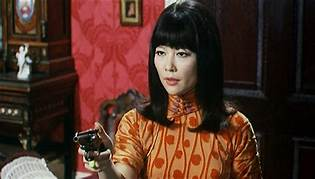
Playing Fu Manchu's daughter Lin Tang opposite Christopher Lee for the entire series was Chinese actress, director,teacher and author Tsai Chin. She was also a "Bond Girl" in 1967's "You Only Live Twice" as an MI-6 undercover agent and she played gambler "Madame Wu" in the 2006 "Casino Royale".
The Chinese Government through their Washington, D.C. Embassy protested the story line of the motion picture. In their formal protest the Chinese Government mentioned a line used by Boris Karloff to inflame his followers:
Kill the white man and take his women!Myrna Loy had a sequence, in this pre-code motion picture, were as Fah Lo See she orders a man tortured and whipped. It is obvious her character is having a sexual organism over what she witnesses.
When the movie was re-released in 1972 "The Japanese American Citizens League" protested those scenes and other elements as anti-Asian and degrading. Twenty-years later in 1992 the first VHS release of "The Mask of Fu Manchu" had these scenes and some others cut. However, the latest DVD releases have these scenes restored.
It would be eight years until 1940 before Sax Rohmer's character Fu Manchu would next be seen on the motion picture screen. "Drums of Fu Manchu" is considered one of the finest serials ever made and the 15 chapter adventure was filmed by Republic Studios.
Portraying Fu Manchu was German/American actor Henry Brandon. Sir Dennis Nayland Smith of the Secret Service was played by William Royle. Olaf Hyteen now played Dr. Flinders Petrie aand Gloria Franklin played Fah Lo Suee.
In the serial Fu Manchu wants to conqueror the world, what else, by finding "The Sceptre of Genghis Khan".
One interesting aspect of the serial is that Fu Manchu gets away at the end. Republic Pictures had to get permission from "The Hayes Office" which was in charge of administering the rules of "The Motion Picture Production Code" to end the serial that way. Under the code the villain is evil and must be destroyed. Permission was granted, but only because in the series of novels Fu Manchu always gets away. Although a second serial was never made. It is believed that Republic Pictures also told the Hayes Office that was their plan.
The next appearances by Fu Manchu were made in Mexico starting with "El espectro de la novia (The Spectre of the Bride)" released in 1943. This series of motion pictures starred British Magician David T. Bamberg who also co-wrote all the screenplays. The other films in the series were "El as negro (The Black Ace)" and "La mujer sin cabeza (The Headless Women)" both released in 1944, "El museo del crimen (The Museum of Crime) 1945, "Asesinato en los studios (Assassination studies) in 1946 and "La casa embrujada (The Bewitched House)" released in 1949.
It was after a performance of his magic in Argentina that David T. Bamberg was offered a World Tour. He agreed. but over time the audiences fell off and Bamberg drifted into the Mexican Motion Picture Industry. Although his character looked the part in at least the first movie. David T. Bamberg's Fu Manchu was a heroic character and a detective. Perhaps influenced by Charlie Chan, or James Lee Wong. His on screen credit was interesting as his name was written as "Fu Man Chu".
On September 3, 1956 a television program "The Adventures of Fu Manchu" premiered. Originally the plan was to have Sir Cedric Hardwicke play the criminal genius, but the deal fell through with the sponsors. Actor Glenn Gordon would eventually be given the role.
What was supposed to be a total payment for the rights to Fu Manchu had been made, but Sax Rohmer wanted more and a court battle followed. The series was planned to be 78 episodes, but only 13 were filmed as a result of the lawsuit.
Each episode started out with Fu Manchu and Dennis Nayland Smith playing chess with Fu's being Black and Smith's White as a voice said:
"Black and white. Life and death. Good and evil. Two sides of a chess game. Two forces of the universe, one magnificent, the other sinister. It is said the Devil plays for men's souls. So does Dr. Fu Manchu, Satan himself, evil incarnate."
While each episode ended with Fu Manchu breaking a black chess piece after his latest plan has been defeated by Nayland Smith and Dr. Petrie.
Horror King Boris Karloff portrayed Sax Rohmer's master criminal once, but another King of Horror Christopher Lee played him five times. The first film was very good, but as Lee wrote the other four were not and got progressively worse.
The British motion picture company Halliam Productions joined with West German studio Constanin Film to make the first movie "The Face of Fu Manchu" in Dublin, Ireland released August 6, 1965. Playing Sir Nayland Smith was Nigel Green. Howard Marian-Crawford portrayed Dr. Petrie as he would for the entire series.
The picture opens with the execution of Fu Manchu as witnessed by Nayland Smith. However, back in London events take place that rise the suspension that he is still alive.
Playing Fu Manchu's daughter Lin Tang opposite Christopher Lee for the entire series was Chinese actress, director,teacher and author Tsai Chin. She was also a "Bond Girl" in 1967's "You Only Live Twice" as an MI-6 undercover agent and she played gambler "Madame Wu" in the 2006 "Casino Royale".
Fu Manchu's base of operations is under the River Thames and it is up to Nayland Smith and Dr. Petrie to stop him. The film ends with what appears to be his death, but his "Face" appears at the ending telling the audience he would be back.
On September 2, 1966 in "The Brides of Fu Manchu". Nigel Green was replaced by Douglas Wilmer as Sir Dennis Nayland Smith, The plot has been used before, but maybe not on such a scale. Fu Manchu and his daughter are kidnapping the daughters of scientists that he needs to construct his weapon to take over the world.
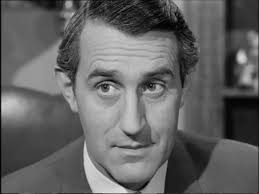
Wilmer would return for the 3rd film "The Vengeance of Fu Manchu" released May 25, 1967. At this point Hallaum Productions dropped out of producing the series and the German Constantin Film was joined by the Chinese film company of "The Shaw Brothers". Although the executive producer for the complete series was Sax Rohmer fan Harry Allan Towers.
There were two dubbed versions of "The Vengeance of Fu Manchu". One was in German and the other English.This was hold for the reminder of the series. As happened with several Foreign Language pictures starring the multi-language speaking Lee. His voice was dubbed back into English by another actor. See my article on Christopher Lee's other Foreign language motion pictures at:
https://kinescopedreams.blogspot.com/2016/08/christopher-lee-foreign-language-motion.html
The simplistic plot has Fu Manchu and his daughter in a remote hideaway in China plotting the death of Nayland Smith.
The fourth film in the series "The Blood of Fu Manchu" released August 23, 1968.The title of the film changed several times to "Fu Manchu and the Kiss of Death", "Kiss of Death", "Kiss and Kill" and "Against All Offs" depending on where it was released.
This time Richard Greene played Nayland Smith and would also repeat the role in the fifth and final film in the series.
There is an interesting bid of movie trivia connected with Shirley Eaton. The actress best remembered as the "Bond Girl" being painted gold at the start of "Goldfinger". The trivia is that she appeared in the picture in one scene without ever filming it, or for many years not knowing that she had appeared in a Fu Manchu picture.
The director Jesse Franco, who directed Christopher Lee in 1970's "Count Dracula", inserted a clip of Shirley Eaton from his motion picture "The Girl From Rio". Note her name actually appears under Richard Greene's on the poster below. Also note that the poster has Greene's last name spelled "Green". One other bit of trivia is the Richard Greene and Christopher Lee both played the same role Sir Henry Baskerville in two productions of Sir Arthur Conan Doyle's "The Hound of the Baskervilles" separated by 20 years. Greene in 1939 with Basil Rathbone and Nigel Bruce as Holmes and Watson and Lee in 1959 with Peter Cushing and Andre Morell in the roles.

The plot had Fu Manchu at a secret base in the Amazon Jungle where he had developed a poison that kills only men. Using a form of mind control he has women deliver "The Kiss of Death" and targets Nayland Smith.
The final entry in this series was "The Castle of Fu Manchu" aka: "Assignment Istanbul" and "The Torture Chamber of Fu Manchu" released May 30, 1969.
In this picture Fu Manchu and his daughter plot to freeze the World's Oceans. Fu takes over the Castle of the Governor of Istanbul Turkey and uses it as his base of operations.


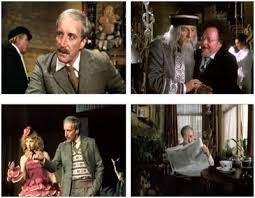
It wouldn't be until August 8, 1980 that Fu Manchu returned to the motion picture screen. The title of this entry was "The Fiendish Plot of Fu Manchu". The film was a comedy starring Peter Sellers in both the roles of Nayland Smith and a 168 year old Fu Manchu. Who is in search of the ingredients to keep him alive in a special elixir. The characters of Dr. Petrie and Fu Manchu's daughter are not in this motion picture.
There were three major problems with the film. For one the attitudes toward stereo typical roles especially played by Caucasian actors of other races had changed greatly in the post Vietnam Era.
The second was Peter Sellers health in this his last film appearance. Critics noted he was very subdued in what should have been two of his typical over the top roles. The third problem was between Sellers and his directors. The film started pre-production under Richard Quine. He was replaced by Piers Haggard for the actual shoot, but there were arguments between him and Sellers Haggard left and Peter Sellers handled the re-shoots and oversaw the film's editing.

The character of Fu Manchu would make a cameo appearance on April 6, 2007 in "Grindhouse". The role was portrayed by non-screen credited Nicolas Cage.

I can not end this look at Fu Manchu without an old style joke that goes back well before I was born.
"CONFUCIUS SAY: ALL MEN EAT, BUT FEW MANCHU!"
On September 2, 1966 in "The Brides of Fu Manchu". Nigel Green was replaced by Douglas Wilmer as Sir Dennis Nayland Smith, The plot has been used before, but maybe not on such a scale. Fu Manchu and his daughter are kidnapping the daughters of scientists that he needs to construct his weapon to take over the world.
Wilmer would return for the 3rd film "The Vengeance of Fu Manchu" released May 25, 1967. At this point Hallaum Productions dropped out of producing the series and the German Constantin Film was joined by the Chinese film company of "The Shaw Brothers". Although the executive producer for the complete series was Sax Rohmer fan Harry Allan Towers.
There were two dubbed versions of "The Vengeance of Fu Manchu". One was in German and the other English.This was hold for the reminder of the series. As happened with several Foreign Language pictures starring the multi-language speaking Lee. His voice was dubbed back into English by another actor. See my article on Christopher Lee's other Foreign language motion pictures at:
https://kinescopedreams.blogspot.com/2016/08/christopher-lee-foreign-language-motion.html
The simplistic plot has Fu Manchu and his daughter in a remote hideaway in China plotting the death of Nayland Smith.
The fourth film in the series "The Blood of Fu Manchu" released August 23, 1968.The title of the film changed several times to "Fu Manchu and the Kiss of Death", "Kiss of Death", "Kiss and Kill" and "Against All Offs" depending on where it was released.
This time Richard Greene played Nayland Smith and would also repeat the role in the fifth and final film in the series.
There is an interesting bid of movie trivia connected with Shirley Eaton. The actress best remembered as the "Bond Girl" being painted gold at the start of "Goldfinger". The trivia is that she appeared in the picture in one scene without ever filming it, or for many years not knowing that she had appeared in a Fu Manchu picture.
The director Jesse Franco, who directed Christopher Lee in 1970's "Count Dracula", inserted a clip of Shirley Eaton from his motion picture "The Girl From Rio". Note her name actually appears under Richard Greene's on the poster below. Also note that the poster has Greene's last name spelled "Green". One other bit of trivia is the Richard Greene and Christopher Lee both played the same role Sir Henry Baskerville in two productions of Sir Arthur Conan Doyle's "The Hound of the Baskervilles" separated by 20 years. Greene in 1939 with Basil Rathbone and Nigel Bruce as Holmes and Watson and Lee in 1959 with Peter Cushing and Andre Morell in the roles.
The plot had Fu Manchu at a secret base in the Amazon Jungle where he had developed a poison that kills only men. Using a form of mind control he has women deliver "The Kiss of Death" and targets Nayland Smith.
The final entry in this series was "The Castle of Fu Manchu" aka: "Assignment Istanbul" and "The Torture Chamber of Fu Manchu" released May 30, 1969.
In this picture Fu Manchu and his daughter plot to freeze the World's Oceans. Fu takes over the Castle of the Governor of Istanbul Turkey and uses it as his base of operations.
It wouldn't be until August 8, 1980 that Fu Manchu returned to the motion picture screen. The title of this entry was "The Fiendish Plot of Fu Manchu". The film was a comedy starring Peter Sellers in both the roles of Nayland Smith and a 168 year old Fu Manchu. Who is in search of the ingredients to keep him alive in a special elixir. The characters of Dr. Petrie and Fu Manchu's daughter are not in this motion picture.
There were three major problems with the film. For one the attitudes toward stereo typical roles especially played by Caucasian actors of other races had changed greatly in the post Vietnam Era.
The second was Peter Sellers health in this his last film appearance. Critics noted he was very subdued in what should have been two of his typical over the top roles. The third problem was between Sellers and his directors. The film started pre-production under Richard Quine. He was replaced by Piers Haggard for the actual shoot, but there were arguments between him and Sellers Haggard left and Peter Sellers handled the re-shoots and oversaw the film's editing.
The character of Fu Manchu would make a cameo appearance on April 6, 2007 in "Grindhouse". The role was portrayed by non-screen credited Nicolas Cage.
I can not end this look at Fu Manchu without an old style joke that goes back well before I was born.
"CONFUCIUS SAY: ALL MEN EAT, BUT FEW MANCHU!"


_15.jpg "View source image")